Closing out 2015, I reflected on the adventure of trying new things, the sorrow of losing things precious to me, and the determination that I have to keep moving forward in all areas of my life. A book was always in my hand to provide me with knowledge and inspiration.
Wherever you may be right now in your career and personal life, I'm sure that you're also reflecting and beginning to plan ahead for the new year. In The Little Paris Bookshop by Nina George, Perdu the bookseller has an uncanny ability to prescribe just the right reading for everyone who walks in the door. In that spirit, here are my reading prescriptions for educators who are wanting to make change happen in 2016.
A Fresh Start
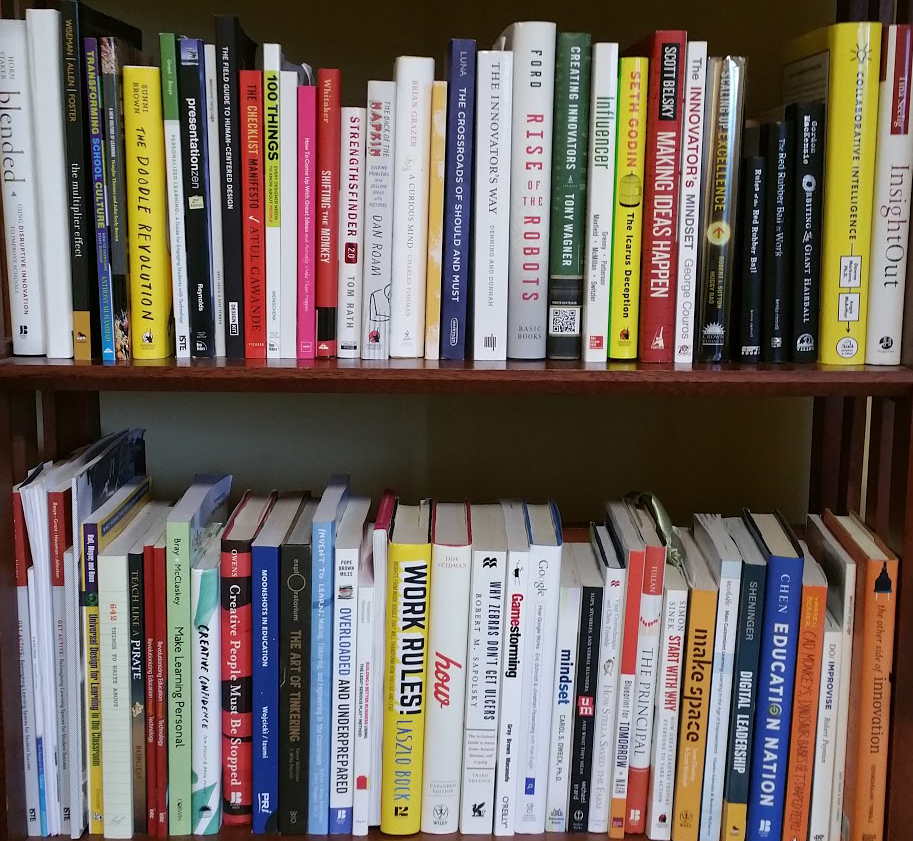
The Life Changing Magic of Tidying Up: The Japanese Art of Decluttering and Organizing by Marie Kondo. Clear out the clutter and the cobwebs in your office and home and you'll find that your thinking clears up too. There is a certain magic to this book if you can just believe and follow Kondo's expert advice.
The Life Changing Magic of Tidying Up: The Japanese Art of Decluttering and Organizing by Marie Kondo. Clear out the clutter and the cobwebs in your office and home and you'll find that your thinking clears up too. There is a certain magic to this book if you can just believe and follow Kondo's expert advice.
Leadership Lessons
Strength Finders 2.0 by Tom Rath provides access to an online assessment to give you a nudge in the right direction of your talents.
The Innovator's Mindset: Empower Learning, Unleash Talent, and Lead a Culture of Creativity by George Couros. George has a heart for students and encourages school leaders to establish a common vision and build on the strengths of others.
The Multiplier Effect: Tapping the Genius Inside Our Schools by Liz Wiseman, Lois Allen and Elise Foster. This book provides many great team activities to bring out the best in everyone and build a strong team.
Strength Finders 2.0 by Tom Rath provides access to an online assessment to give you a nudge in the right direction of your talents.
The Innovator's Mindset: Empower Learning, Unleash Talent, and Lead a Culture of Creativity by George Couros. George has a heart for students and encourages school leaders to establish a common vision and build on the strengths of others.
The Multiplier Effect: Tapping the Genius Inside Our Schools by Liz Wiseman, Lois Allen and Elise Foster. This book provides many great team activities to bring out the best in everyone and build a strong team.
I Have an Idea
How to Come Up With Great Ideas and Actually Make Them Happen by Ewan McIntosh. Ewan practices what he preaches and uses learning from companies and schools to show how design thinking can help your organization to innovate.
The Field Guide to Human-Centered Design by IDEO.org is a great toolkit for getting started with designing solutions that are innovative and impactful. Great workshop materials are included.
The Lean Startup by Eric Ries. Don't just sit there. Get moving! This book encourages you to build the plane while you're flying it.
How to Come Up With Great Ideas and Actually Make Them Happen by Ewan McIntosh. Ewan practices what he preaches and uses learning from companies and schools to show how design thinking can help your organization to innovate.
The Field Guide to Human-Centered Design by IDEO.org is a great toolkit for getting started with designing solutions that are innovative and impactful. Great workshop materials are included.
The Lean Startup by Eric Ries. Don't just sit there. Get moving! This book encourages you to build the plane while you're flying it.
Seeking Adventure
A Curious Mind: The Secret to a Bigger Life by Brian Grazer. Brian's stories will give you ideas for seeking out answers to those curious questions.
The Crossroads of Should and Must: Find and Follow Your Passion by Ella Luna. Sometimes you just need a little inspiration. This book will inspire you to take advantage of opportunities for adventure.
Insight Out: Get Ideas Out of Your Head and Into the World by Tina Seelig. Tina provides insights into how you can move forward with implementing your ideas with an entrepreneurial spirit.
A Curious Mind: The Secret to a Bigger Life by Brian Grazer. Brian's stories will give you ideas for seeking out answers to those curious questions.
The Crossroads of Should and Must: Find and Follow Your Passion by Ella Luna. Sometimes you just need a little inspiration. This book will inspire you to take advantage of opportunities for adventure.
Insight Out: Get Ideas Out of Your Head and Into the World by Tina Seelig. Tina provides insights into how you can move forward with implementing your ideas with an entrepreneurial spirit.
Stuck in a Rut
The Achievement Habit by Bernard Roth. Roth, co-founder of the Stanford d.school, explores how you can use design thinking to reach your goals.
Scaling Up Excellence: Getting to More Without Settling for Less by Robert Sutton. Sutton shares his expertise and discusses how successful organizations are able to effectively scale programs.
Most Likely to Succeed: Preparing Our Kids for the Innovation Era by Tony Wagner and Ted Dintersmith will challenge you to think about re-imagining education to prepare students for success in a global economy.
The Achievement Habit by Bernard Roth. Roth, co-founder of the Stanford d.school, explores how you can use design thinking to reach your goals.
Scaling Up Excellence: Getting to More Without Settling for Less by Robert Sutton. Sutton shares his expertise and discusses how successful organizations are able to effectively scale programs.
Most Likely to Succeed: Preparing Our Kids for the Innovation Era by Tony Wagner and Ted Dintersmith will challenge you to think about re-imagining education to prepare students for success in a global economy.
Craving Creativity
The Doodle Revolution: Unlock the Power to Think Differently by Sunni Brown will unlock your artistic abilities and enable you to capture deep thinking.
Creative Confidence: Unleashing the Creative Potential Within Us All by David Kelley. Kelley believes that we all have the power to think creatively and use innovative approaches to solve problems.
The Doodle Revolution: Unlock the Power to Think Differently by Sunni Brown will unlock your artistic abilities and enable you to capture deep thinking.
Creative Confidence: Unleashing the Creative Potential Within Us All by David Kelley. Kelley believes that we all have the power to think creatively and use innovative approaches to solve problems.
Telling your Story
Weekend Language: Presenting with More Stories and Less PowerPoint by Andy Craig and Dave Yewman will give you the tools to be a great speaker.
The Back of the Napkin: Solving Problems and Selling Ideas with Pictures by Dan Roam. Learn how you can sell your idea to anyone using six types of images.
Um..: Slips, Stumbles, and Verbal Blunders, and What They Mean by Michael Erard will make you more aware of how you speak and help you to remove "um" and "you know" from your vocabulary.
Weekend Language: Presenting with More Stories and Less PowerPoint by Andy Craig and Dave Yewman will give you the tools to be a great speaker.
The Back of the Napkin: Solving Problems and Selling Ideas with Pictures by Dan Roam. Learn how you can sell your idea to anyone using six types of images.
Um..: Slips, Stumbles, and Verbal Blunders, and What They Mean by Michael Erard will make you more aware of how you speak and help you to remove "um" and "you know" from your vocabulary.
Dealing with Failure
The Other Side of Innovation: Solving the Execution Challenge by Vijay Govindarajan and Chris Trimble and the companion book How Stella Saved the Farm explains how to navigate rough waters and build new capabilities for your organization.
Orbiting the Giant Hairball: A Corporate Fool's Guide to Surviving with Grace by Gordon MacKenzie is a fun read and helpful for educators who are navigating roadblocks and jumping over hurdles.
The Other Side of Innovation: Solving the Execution Challenge by Vijay Govindarajan and Chris Trimble and the companion book How Stella Saved the Farm explains how to navigate rough waters and build new capabilities for your organization.
Orbiting the Giant Hairball: A Corporate Fool's Guide to Surviving with Grace by Gordon MacKenzie is a fun read and helpful for educators who are navigating roadblocks and jumping over hurdles.
I hope this list will provide you with the right dose of inspiration, knowledge, and confidence as you enter into 2016. Enjoy!