Friday, January 12, 2018

What's Your North Star? A Reading Prescription for 2018

IMG_20180112_115118

I wrapped up 2017 watching the documentary, Losing Sight of the Shore which is about six women who have dreams to accomplish and demons to conquer. The movie's message is that “everyone has their own pacific to cross.” Each team member faces the unknown and struggles with the challenges of being at sea for months as they move from California to Hawaii to Samoa to Australia on the Coxless Crew women’s rowing team. What struck me most about the documentary was that each member of the crew faced the voyage in a different way and each person's inner journey was unique based on their personal goals. 

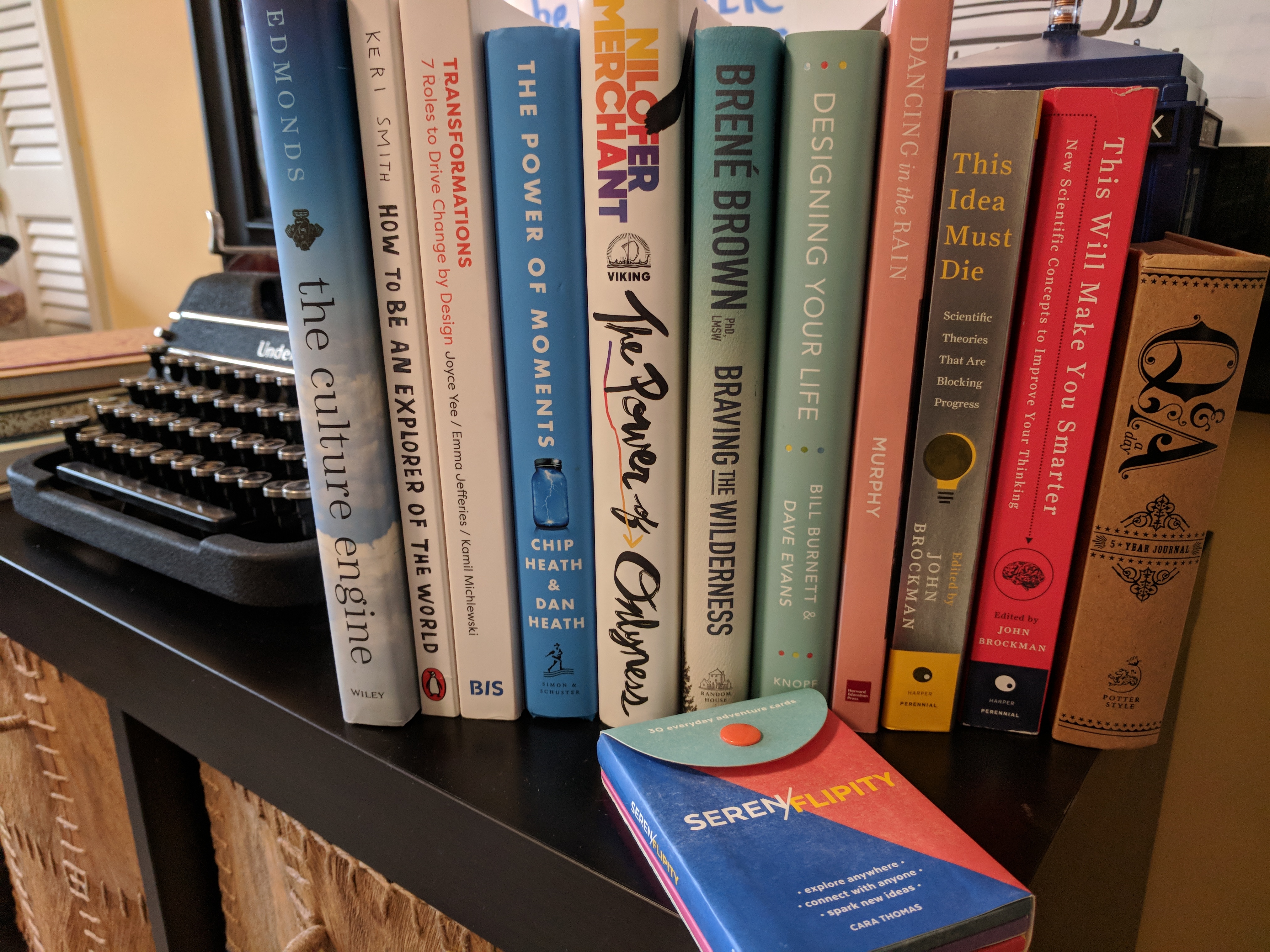
As I welcome in 2018 and the promise of new adventures and experiences, I also like to look back on the books that were doses of inspiration during 2017. These prescriptions helped me in both my personal and work life to cross my own pacific and make meaning out of each day. I hope that this reading prescription will help you in your 2018 journey around the sun. Enjoy!

The Human Condition
Every Day is an Adventure
Designing for Change
Stretch Your Thinking
Best wishes for a wonderful new year pursuing your personal and professional goals!

Monday, October 2, 2017

Fostering a Culture of Innovation


IMG_20170919_162613How might we cultivate, spread and scale a culture of innovation throughout our classrooms and schools to catalyze people for positive change? This is the powerful question that we’re exploring in my school district, Richland School District Two  in Columbia, SC. Coming to a common understanding about what a culture of innovation means has been essential in the development of our vision. An innovative school culture fosters community, encourages new ideas to solve complex issues and is the foundation for successful schools and ultimately for successful students. It’s easy to talk about creating a culture of innovation, but it’s harder to implement. And if trust in the culture is broken, it’s much harder to rebuild.
Many great resources are available to assist schools in reimagining culture and taking steps for a culture shift. Some of my favorite resources include the Johnson and Scholes Culture Web and *Gartner research on steps that lead to a culture of creativity.  We can also learn from companies like Inteland Google and how they create a climate for curiosity, agency, risk taking, and collaboration.  Based on my own experience and the research of others, here are six steps you can take this year to build a culture of innovation in your classroom and school.
Six Steps to Building a Culture of Innovation
  1. Change your perspective. Use design thinking techniques for observing and interviewing to get a sense of what is going on in your school or classroom. Observation gives you fuel for thought, but you need to follow up with interviews to find out more about what people are thinking and feeling. Shadow a student or colleague for a day to change your perspective and put yourself in someone else’s shoes. You can read more about this from my Intel Visionary friend and colleague Melissa Lim. In her post on the Intel IT Peer Network, Setting Goals for the New School Year, she talks about being a mindful listener and being aware of implicit biases.
  2. Activate others to use their talents. How we welcome our staff, learners and community sets the stage for how everyone engages in the school culture. Little steps like sending hand written invites to an event, setting up a room for collaboration and incorporating mixer activities can make a big difference in participation and engagement. In a typical meeting, 20% of the people take up 80% of the time. To create a culture of innovation, organize the structure of classes, workshops and design sessions so that 100% of the attendees are involved 100% of the time. Follow-up after events by sending out thank you notes and giving shout outs to participants. Remind people of next steps and provide ongoing support, check-ins, and road block removal.
  3. Create rituals and routines to foster innovation. Rituals are a way to bridge the gap between our desired beliefs and behaviors and the current state.  They can be used to create a group identity, raise team spirit, put people in a mindset to think creatively, or encourage collaboration. Ideas that can easily be incorporated include using design thinking methods in team meetings, providing exercise or mindfulness breaks, and celebrating new students and staff members through recognition programs. Think about your desired results and then design rituals to achieve those results.
  4. Position yourself as a learner. It’s easy to get into a routine of doing work that we know instead of reaching out to learn new content, methods or skills. Time constraints and daily work make it challenging for us to take on new growth opportunities but we need to model learning to be successful in creating a positive school culture. Step outside of your comfort zone and try something new to rewire your brain. We need to unlearn old habits to make way for new ways of working. In the video, The Backwards Brain Bicycle, Destin Sandlin, explores how difficult it is for us to unlearn habits and biases. Keeping ourselves challenged and in flow will help to develop a culture where risking taking and learning from failure is valued. Encourage practices like 20% time to provide students and others in your organization with time to work on their passions.
  5. Build a network of trust and collaboration. Building an innovative community is achieved by creating opportunities for others to have discussions and collaboration.  In The Power of Onlyness, Nilofer Merchant emphasizes that each person in a network brings their own unique contribution (onlyness) that becomes amplified by the onlyness of others. When people come together for a common cause, they can have a powerful influence on the naysayers. During a recent visit to Nashville, I was reminded of the power of networks while visiting RCA Studio B. This small room produced some of the most well known singers and musicians with over 1000 hits. By giving everyone a place to share their voice, we build trust which is an essential ingredient for a thriving, innovative community.
  6. Be a storyteller. To be successful with shifting to a culture of innovation, you need to share stories. Create opportunities for students and educators to share their ideas and tell their stories. Innovation events and activities promote collaboration and provide a way for people to share both their successes and their failures. As more stories are told, more people will be willing to try new approaches and share their experiences.
The next steps is to get started! Bring together a team, establish a common vision for a culture of innovation and brainstorm ideas that you can prototype and test. I look forward to hearing how these approaches work for you!

References and Suggested Reading:

Wednesday, May 10, 2017

Partnerships: Beyond the Pizza Party

We’ve all been there before. Running out to pick up pizza for a school party or to keep people energized as they work long hours. I can’t begin to count the number of pizzas that I’ve purchased in my career as an educator for events like yearbook work sessions and after-school department meetings. And let’s be real. Pizza is easy. It’s cheap. No plates are needed and most people are happy to grab a slice and get back to work.
But the easy way isn’t always the best way. I recall returning to work from a conference a few years ago. There was cold, leftover pizza in the workroom refrigerator. I asked about the pizza and discovered that it was delivered to me from a business partner. Days old pizza is not so good. The partner didn’t think beyond the easy way to determine what might be a better method to show appreciation for our team.
This discussion with colleagues about pizza led to a conversation about partnerships and the importance of engaging with partners in a meaningful way. Partnerships are a two-way street, and I hope that schools as well as organizations that partner with schools will benefit from this post. Partnerships cover a wide spectrum from a classroom teacher connecting with a business partner for mentoring to a school district engaging with a partner for a variety of services including consulting, professional development, or products. With so many businesses and organizations offering services, we must be careful to engage with the right partners. We don’t have money or time for everything and can’t afford to be burned by failing initiatives.
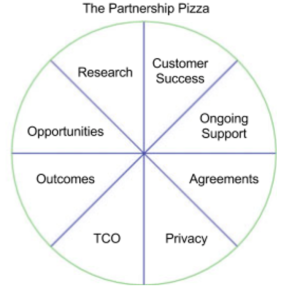
Here is my eight slice pizza with tips to guide you as you engage with partner organizations and businesses:
pizza
  1. Research – Do your background research by looking at credible sources and calling other schools that have used the product or service. Talk with people beyond those who are recommended by the potential partner. Testimonials on a website are great but they don’t tell the whole story.
  2. Customer Success – Does the organization or business have a customer success representative who is assigned to work with you? Organizations that don’t invest in someone to make others successful are setting themselves up for failure. I recall a recent conversation when I called a customer service center about repairs needed to my home Internet access. I was very frustrated with the response time but the support person on the phone with me never once got mad. He continued to talk calmly and worked with me on a solution. If your organization is receiving services from an business and you provide feedback, they should welcome feedback and work with you on solving the problem.
  3. Ongoing Support – The beginning of a partnership is a lot like a honeymoon. You and the partner will spend a lot of time together and you get used to this support. What happens after the honeymoon? The partner will move on to find new clients. Will they continue to check in with you and provide ongoing support? Will the cost go up over time? Ask support questions before you enter into an agreement.
  4. Agreements – Is there a partnership agreement that clearly spells out what services or products you’ll receive? If you’re receiving a discount on a software product, what are the expectations from you in return? If a partnership fails, what are the loose ends that you’ll be left to tie up? How will the partner help you with the transition beyond the awkward breakup?
  5. Privacy – If you’re using an online platform provided by the partner, are there clearly defined privacy statements about ownership of data and how that data will be used? In the age of analytics, all businesses are collecting data about customers. Take some time to discuss the privacy policy with others and include your attorney if there are questions about the policy. If the partnership ends, does the business still have access to your student or teacher data and can they continue to use that data?
  6. Total Cost of Ownership – Beyond financial costs, what is the cost that your school will pay for implementing a product or service? How many hours will people devote to the project and is it sustainable in the long run? Ask what it’s worth to you and always be clear with the partner about your goals for the partnership.
  7. Outcomes – What is your vision for the partnership? Doe your definition of success align with that of the partner? Metrics and funding are important, but the bottom line is that you achieve the desired outcomes for your partnership.
  8. Opportunities – Most important, what opportunities will be opened up for your school and the teachers and students who engage with the partner? Will the product or service benefit your organization? Will professional development and consulting services empower participants with skills and tools to improve learning?
Good partnerships are about telling each other’s stories, celebrating successes, and supporting each other when things aren’t going well. Our success as a customer means their success as a partner organization. Let’s go beyond the pizza party to form partnerships that bring value to students and teachers in our schools.

Saturday, February 25, 2017

Reading Prescription for 2017

20161023_075808
As I wander through bookstores and online communities, I pick up quite a few books for learning and enjoyment. After a great year of reading and reflecting on my learning, I'm happy to share out my reading prescription list for 2017.
Creativity and Thinking:
What We See When We Read by Peter Mendelsund - How do we visual what we're reading and fill in the gaps in the text? Understand more about your own reading and also learn how you can help students become better readers.
Originals by Adam Grant celebrates our unique talents and skills which allow us to go against the status quo and have success in our work and personal lives.
The Autistic Brain: Helping Different Kinds of Minds Succeed by Temple Grandin. Temple shares her unique and personal perspective on autism and provides us with great strategies for connecting with autistic students.
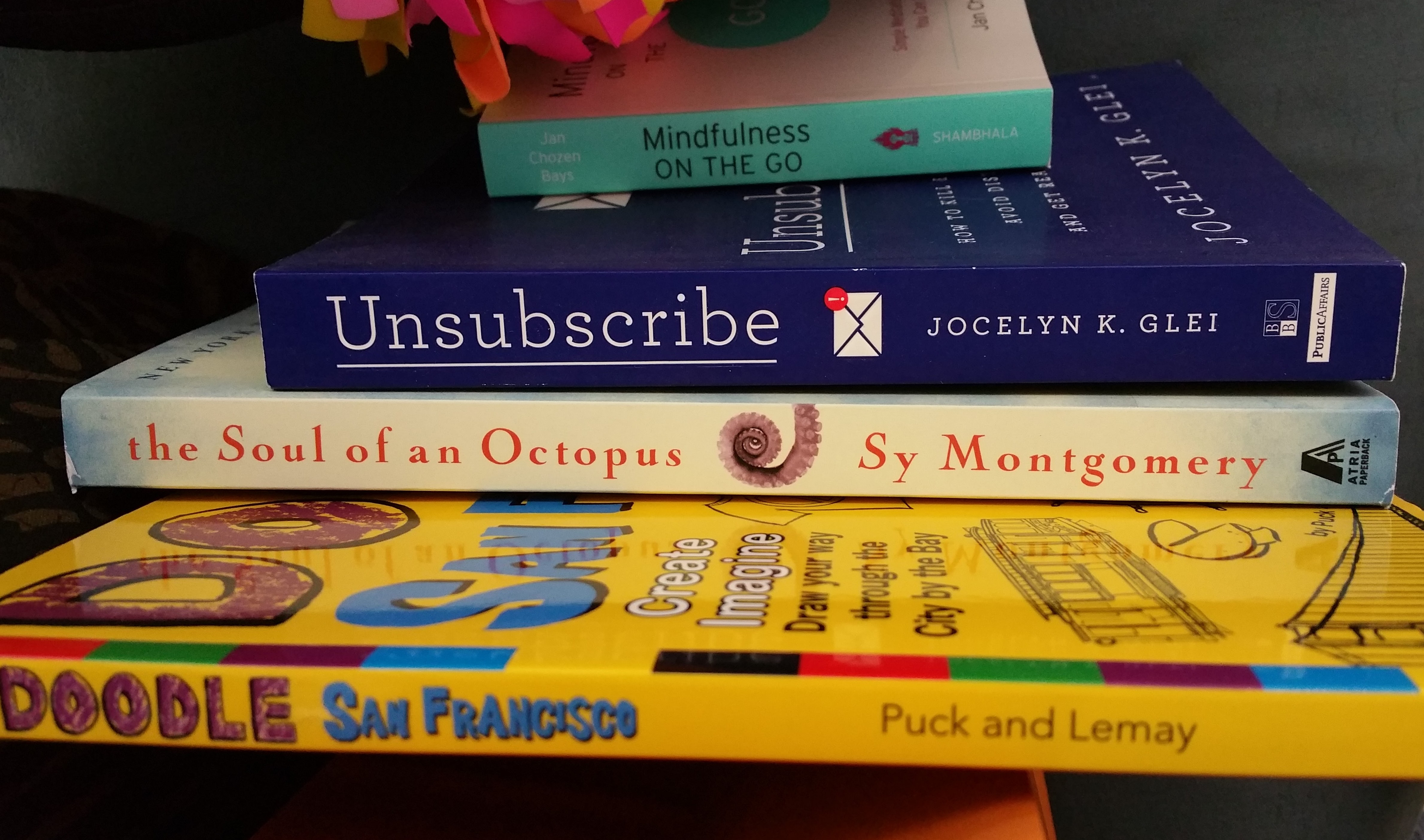
The Soul of an Octopus by Sy Montgomery. What's not to love about an octopus? This personal account by Sy Montgomery allows us to peek into the lives of these intelligence creatures and learn more about how they connect with each other and with humans.
Syllabus: Notes from an Accidental Professor by Lynda Barry. Any teacher who struggles with  creating the required course syllabus will love this interactive approach to teaching writing and creativity.
Maker-Centered Learning: Empowering Young People to Shape Their World by Edward P. Clapp, Jessica Ross, Jennifer O. Ryan, Shari Tishman. The authors provide a firm foundation in maker learning and a framework for integrating maker learning into classrooms and schools.
So Many Ideas:
What Do You Do With an Idea and What Do You Do With a Problem by Kobi Yamada. When you're facing a big problem or you have a big idea, these books will inspire you to keep going. Suitable for young children as well as adults who are young at heart.
Innovating for People Handbook of Human-Centered Design Methods by the LUMA Institute. The LUMA Institute provides a wealth of activities to use during the design thinking process. Keep this book handy!
Thinkertoys: A Handbook of Creative Thinking Techniques by Michael Michalko. Think like a genius and unlock your creativity with these techniques. Use the Thinkpak to jumpstart your thinking when you're feeling stuck.
Sprint: How to Solve Big Problems and Test New Ideas in Just Five Days by Jake Knapp and John Zeratsky. Use this book as a guide to run your own five-day design sprint to solve tough challenges for your organization.
Being Our Best:
The Power of Habit: Why We Do What We Do in Life and Business by Charles Duhigg. Take a deep dive into the research about how habits are formed and learn strategies to bring winning habits into your life.
Healing Spaces: The Science of Space and Well Being by Esther Sternberg. Our senses, emotions, and immune system all work together and can bring us a sense of well being or feelings of disaster and anxiety. Find a great place to read this book and reduce the stress in your life.
Unsubscribe by Jocelyn Glei. Unsubscribe, disconnect, and get yourself loose from those pesky e-mails and messages that take up so much of your time. Tame the beast and bring sanity back into your life.
Daring Greatly: How the Courage to be Vulnerable Transforms the Way We Live, Love, Parent and Lead by Brené Brown. Brené's exploration of the research behind shame led her to some surprising discoveries about our need for connection and community. By becoming shame resilient and opening ourselves up to vulnerability, we also open up the door to wholehearted living. Watch her TED Talk to be inspired!
Thrive: The Third Metric to Redefining Success and Creating a Life of Well-Being, Wisdom, and Wonder by Arianna Huffington. Through her own experience of being over-worked and stressed, Arrianna Huffington shares strategies that helped her to unplug and feel more connected at home and work.
The Human Condition:
A Man Called Ove by Fredrik Backman. You'll grow to love this cranky neighbor! Ove inspires readers to look beyond the exterior and see the person inside.
The Unlikely Pilgrimage of Harold Fry by Rachel Joyce. Walk out of the door with Harold Fry and you'll go on your own journey of self-reflection and discovery.
Off the Road: A Modern Day Pilgrim's Walk Down the Pilgrim's Route into Spain by Jack Hitt will inspire you to take your own pilgrimage and do it your way.
There Is No Good Card for This: What to Say and Do When Life is Scary, Awful, and Unfair to People You Love by Kelsey Crowe, Ph.D. and Emily McDowell. The authors explore empathy and how we can connect with others who are encountering challenges in their lives.

Monday, January 2, 2017

Finding a Balance with Social Media

20160825_095156
As social media continues to have a big impact in our society, I've been considering how to best fit it into my own life. Communications technology continues to evolve and the next evolution may be contact lenses that allow you to  overlay virtual experiences without a headset. Instead of being alone in a virtual world, we would be able to take out experience out into the world and see real time data about people and places. It's easy to imagine how this could effect our lives in both positive and negative ways.
The Netflix series, Black Mirror, recently took this idea to the dark side with their Nosedive episode. In the episode, Lacie Pound is eager to move up on the social media ladder from a 4.2 to a 4.8. She has implanted contact lenses which allow her to see the status of everyone around here. In her world, a 4.2 on a scale of 1-5 is not quite good enough. If she can boost her status to a 4.5 or higher, she has access to better housing, work and social experiences. Here life is going well when she's invited to be the maid of honor at the wedding of a childhood friend. On her journey to the wedding, her status begins to unravel as she loses her temper at the airport and ends up hitchhiking to the wedding. Along the way, she meets Susan, a 1.4 truck driver, who has lost her husband to cancer because his status wasn't high enough for the best treatments. The episode is thought provoking but I don't want to be a spoiler. Watch it to see how this finally ends for Lacie.
For me, Nosedive was too close to reality. Airlines, hotels, and amusement parks all have programs where you can boost your status to receive added benefits. We pay more so that we can have a better seat, a nicer room, or a shorter line. It feels great when you have the upgraded status and pretty awful when you're at the back of the line. And on social media like Twitter and Facebook, we get likes, shares and retweets when people approve of what we post. The impact of social media in influencing our decision making is huge. The recent U.S. presidential election is a powerful example of how social media was used to influence voters.
Nosedive also reminded me of the struggles that I had (and still have) with self worth. In high school, I always felt like I was not quite good enough. You can read my Teachers Guild post for that story. I still remember applying for Anchor Club membership in high school and being rejected. There was some secret formula, much like the Nosedive 4.8, that was required for membership. Rather than accept the status quo, my friends and I created a new club with open membership for all students. Even today, I attend events and am troubled by how online status effects how people interact with each other.
I love having the opportunity to share and connect with others online and am grateful to have so many social media tools available. The problem comes when I pay too much attention to those status reports from Twitter and LinkedIn and spend too much time editing my thoughts to 140 characters. I've learned from my work with innovators that people are at their best when they don't worry about status. They do great work because they're passionate about that work and willing to take a risk.
As I begin 2017, my goal is to find the right balance with social media. I want to continue to connect and share with others. My own personal growth is dependent on these relationships. Below are questions that I will consider (and you can too) to build a thriving online community.
  • Who do you want to connect with? Follow those people online. Send them personal messages and develop a relationship. Find them at conferences and have conversations. Schedule video chats to discuss topics of interest. If they're more interested in your status than who you are, don't spend time trying to get their attention.
  • Why do you want to connect through social media? Do you want to learn more about a specific area of interest? Are there places and events in your community where you can also connect face-to-face? Ask why enough times and you'll come up with some interesting answers.
  • What do you want to share and what do you want to learn from others? Seek out online communities with people who share your interests. A private community through Slack might allow you to share more openly and build strong relationships.
  • How will you will share your message? Instead of squeezing everything into 140 characters, create a blog or video and share the link. Start a book discussion. If you want to get to know people on Twitter, join a weekly Twitter chat.
  • When will you connect on social media? Schedule several blocks of time on your weekly calendar and make it a habit to use that time for learning and sharing.
As 2017 begins,  I look forward to connecting with you online and also engaging in face-to-face conversations and activities. Thank you for being there for me and best wishes for a Happy New Year!

Saturday, August 27, 2016

Beyond the Permanent Record

All the Names
One of the most thought provoking books that I've read over the past few years is All the Names by Jose Saragamo. Senhor José is keeper of the records for nameless people in his city. The records of the living and the dead stretch back through time and he becomes caught up in looking at records and wondering about the people that they represent. His quest to find out about an unknown woman and her life attracts the attention of the registrar and he quickly becomes suspect as he takes risks to challenge the system and find a real connection.  In the end, the record means nothing. It doesn't capture the story of that person.
20151021_145236
Our Permanent Records
I imagine that in some dark closet in the district where I attended school, there's a file (maybe on microfiche) of my permanent record from school. Along with my GPA, class rank, and club records, is perhaps a miscellaneous accounting of my shortcomings and mistakes. The time that my first grade teacher kept us after school until someone confessed to stealing something. Even though I wasn't the guilty student, I cried buckets of tears to be wrongly accused and punished. And I missed choir practice that day. From which I didn't recover. Because I stopped singing.  I'm sure there's also a stack of records recording my failure at softball, crafts and handwriting. I was a left-handed student in a right-handed world and no one accounted for that in sports or instruction. Scissors were a challenge. I developed a horror of volleyball and was sent to the guidance counselor for some psychological evaluation. I heard "this will go on your permanent record" so many times that I stopped talking in class. One teacher commented, "Donna is so quiet. I hardly know she is there. She is a good student." And so I followed the rules.
And the permanent records don't end when we graduate from college. We get jobs and have performance evaluations that go in a file somewhere. Education, like many other professions, has an extensive set of requirements to ensure that employees are qualified for their jobs. We don't always get a redo when we've had a failure. In the worst circumstances, we get a file in our permanent record. So we follow the rules and avoid implementing new ideas that are risky.
Beyond the Permanent Record
Somehow, in spite of the permanent records on file, I've managed to get along in the world. In fact, the struggles have made me more empathetic to students and colleagues at work. It turns out that there can't be a permanent record for a person. The power of the human spirit is that we can grow, change and overcome challenges. We are in a constant state of iteration with each new experience. We learn from failures and that becomes a strength.  Ernest Hemingway said it well, "The world breaks everyone, and afterward, some are strong at the broken places."
There is light at the end of the stack of records. Many schools around the country are recognizing the need to allow our students to continuously progress over a continuum through competency-based education. Programs that foster growth mindset and 21st century skills are enabling students to become successful, lifelong learners.
The final step in removing the permanent record is to empower teachers to try out new ideas and protect them from adverse consequences. If we want our students to become problem solvers, we must allow educators to find and solve problems too. I encourage readers to embrace empathy and support colleagues in their continuous growth this year. By building each other up, we are building a future for our students. Our lasting record is the difference that we make in the lives of students and colleagues.

Wednesday, August 17, 2016

Let's Cut Out Copy/Paste in Education

DSC09650
#r2innovates Si Se Puede team designs for their customers
In the Sundance movie Ants on a Shrimp,  René Redzepi, chef and co-owner of Noma, a Denmark restaurant, decides to risk everything to open a restaurant in Tokyo, Japan for a five week run. He moves his entire staff to Tokyo and asks them to reimagine a 14 course menu. 
After weeks of preparation, the staff shares their new menu with Redzepi. He is a harsh critique and reflects that they have simply copied the menu structure from the Denmark restaurant and pasted it in the new restaurant. They were not able to think beyond the template that they knew. He reminds the team that they have customers with high expectations for excellence and asks that they get back to work with their customers in mind. A review of the movie states that Redzepi pushes his staff "not just to look but to see" through a different lens to come up with a unique menu to meet the needs of Japanese customers. 
As the new school year begins, I challenge each of you to cut copy/paste and templates out of your vocabulary and actions. In professional development workshops, I often hear participants asking for a template to use as they create lessons and long range plans. Our educational system has trained us to be good followers - to complete the lesson plan templates, fill out the evaluation forms, and follow the set schedules.
Old habits die hard, but we must change those habits and replace them with a design process that allows us to move outside the boundaries of what we've done in the past. We need to prepare our students to be critical thinkers and problem solvers. They deserve to have the opportunity to come up with unique solutions and express their creativity. Copy/paste doesn't work if we want to develop cognitive skills in our students.
Taking another lesson from Redzepi, go outside of your school and classroom and immerse yourself in the culture of your community. Talk to business people about their hiring practices and what qualities they look for in applicants. Bring together a team of educators and brainstorm ways to bring a fresh perspective to your work. Ban the phrase "this is the way we've always done things" and make bold moves to prototype new, promising ideas that will prepare our students for the future they deserve.
I look forward to hearing your stories. Have an amazing school year!

Monday, May 30, 2016

Putting Teachers in the Driver's Seat

20160503_163135
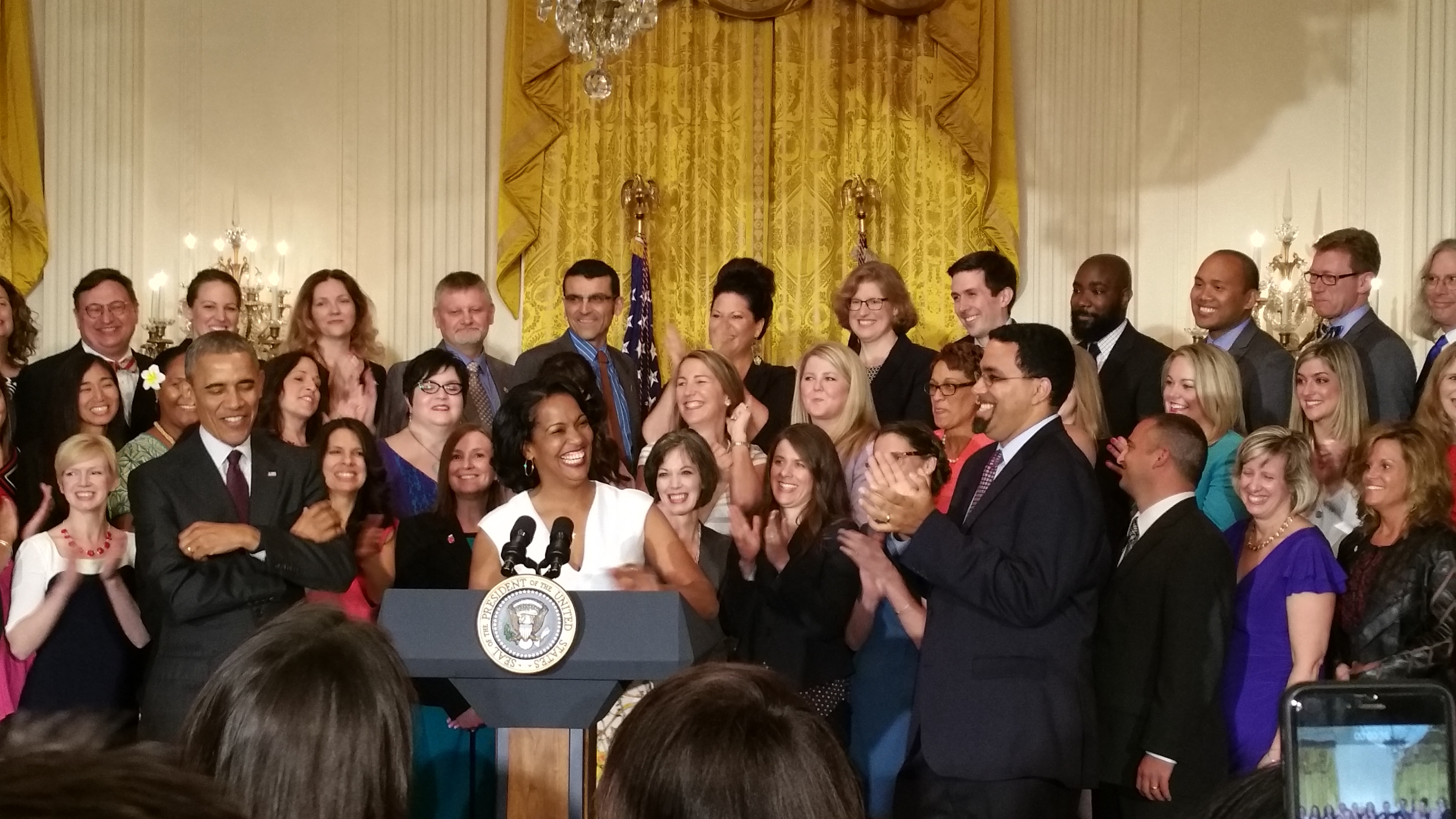
A few weeks ago I was honored to attend a Teacher of the Year event at the White House along with other great educators. The Teachers Guild team nominated me and I was excited to be chosen as an honored guest. I heard  Jahana Hayes, the National Teacher of the Year, speak as well as President Obama. Jahana and the other state teachers of the year are all doing amazing work in their schools to positively impact students.
Need for Teacher Agency
As I moved around the rooms and talked with other educators, I was struck by all the success stories that I heard from teachers who have clearly gone beyond challenges at their schools to implement positive change while staying in the classroom. The experience gave me time to reflect on ways that we can provide more teachers with agency to take on leadership roles in their schools. Teachers don't always feel like honored guests when they walk into their schools. In conversations, I hear frustration over all of the expectations placed on teachers that prevent them from moving beyond the systems and silos that we unintentionally put into place. These expectations become roadblocks to change. 
Many teachers who want to have more agency end up on the road to becoming school administrators. This is the clearest path available to having more influence at the school level. As school administrators, they quickly discover that expectations from school boards and state departments of education limits the autonomy that they had hoped to have in their new job role. What we really need is a way to provide teachers with a leadership pathway that allows them to have the best of both worlds. 
Developing Teacher Leaders
Nationally and locally, there are many great programs that are trying to address the need for developing teachers as leaders. Teach to Lead. a program sponsored by the U.S. Department of Education, ASCD and the National Board for Professional Teaching Standards hosts summits throughout the year to provide teams of educators with time and resources to develop action plans that they can implement in their schools. At the summit, I learned about the Teacher Leader Model Standards, created by a consortium of educators. The standards provide a good framework for schools and districts that want to development programs for teacher leadership.  The Teacher Powered Schools organization is a great place to see what works. The site has toolkits that you can use in your school to start discussions about how to provide teachers with more autonomy. 
Teacher Agency Leads to Student Agency
I attended the Baltimore Teach to Lead Summit with my R2 Innovates team, Si Se Puede,and we were able to make a lot of progress on developing next steps for our initiative to bridge the gap that exists between home and school for our Latino families. As I've continued to work with the team in my district, I've seen amazing changes happen in the lives of students. By giving the team permission and time to design and try new ideas, the district has benefited with greater parent engagement and improved student achievement. LaChe Williams, a Conder Elementary School teacher, worked with the team to create a student-led conference format that has been shared throughout the district and on the Teachers Guild. If we want students to have agency in their learning, we have to give teachers agency to put their ideas into action.
From the Backseat to the Driver's Seat
One of our R2 Innovates team leaders said it best, "You come up with an idea about something that you want to change, and then it (the process) changes you." I encourage all educators to engage in conversations about ways to make teachers the honored guests and move them from the backseat into the driver's seat. Teacher leaders hold the key to meaningful change in our schools.

Tuesday, April 12, 2016

The Sorting Hat

20160222_102926
A few months ago, I took the Myers-Briggs personality test as an assignment for a school leadership course. Most educators have encountered this test at some point in their careers. The indicators are designed to give you a sense of how you experience the world with the goal of helping you to understand your strengths and weaknesses and connect with others who can fill those gaps.
With test results in hand, I found myself singled out with a very small group of people as we grouped together around each of the four categories. At one point I was in a group of two. Almost all of the district leaders fit into just a few of the 16 profiles. Very few introverts were in the group. Looking at the data for administrators, it became apparent that there was little diversity in profiles of leaders in the group. This is not a bad thing – just an indicator that school leadership attracts people who have skills which match the system needs. It could also be an indicator that people who don’t fit into those categories have a harder time staying in the profession.
A recent article in the Atlantic describes the large number of introverted educators who are burning out. Teachers cite constant meetings and initiatives as draining. These teachers and leaders need to have time to decompress and reflect and their busy lives allow little time for this. Susan Cain in Quiet: The Power of Introverts in a World That Can’t Stop Talking expands on how introverts deal with stress in the workplace and feels that we sometimes undervalue their contributions. Cain has sparked some controversy with her statements about the overemphasis on collaboration in the workplace and schools, but I don’t think we can ignore what she is saying about the need to provide educators and students with time to reflect and refuel. Education needs teachers and leaders who are empathetic and introspective.
At a recent event, I had time to connect with a group of colleagues and friends from around the world and I was reminded of the value of a diverse team. We had several conversations around the idea that our differences made our group better. No one minded that some of us were quiet, some of us were loud, and some of us were just plain tired. We’re from diverse backgrounds and have differing opinions about a lot of things including political preferences to preferred computing devices. In spite of our differences, the conversation always came back around to what we had in common. Through this six degrees of separation discussion, we connected with each other.
In thinking about how we might transform our educational system into a place that attracts and utilizes the skills of a diverse group of educators, I believe that we need to find a variety of ways to provide each other with support. There’s no substitute for time and space to meet in small groups and reflect on our journey together, but online space can also provide educators with a safe space to share and reflect. Small professional learning teams can bridge the divide between educators who have different personality traits. Everyone benefits from small group discussion and collaboration with a learning team.
I recently heard someone say, “When I go on stage with people different than me, they raise my game.” So the question becomes, how can we create an environment that allows all types of educators to connect, reflect and grow in their job roles?

Tuesday, February 9, 2016

Minding the Gap

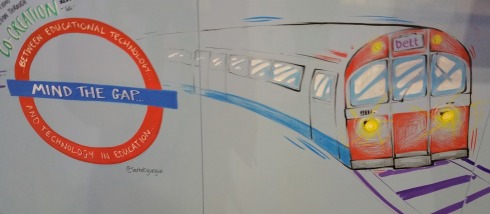
On a recent trip to London, I had the opportunity to travel on the light rail and underground system. Every station had a “Mind the Gap” sign warning of the dangers when entering a train. As someone who experienced an actual fall through the gap on a train platform many years ago, I took some time to reflect on the analogous experience of students preparing for college. Students who are on a journey to and through college are like travelers entering trains to get to a final destination. They need a clear sense of direction and sure footing to reach their intended destination. If they’re unprepared, they may never understand the system to purchase a ticket or they might fall through the gap before entering the train. Having a disability that prevents them from gaining entry in the normal way is also a challenge. Once on the train, they find themselves pressed together with a diverse group of people and are sometimes hanging on tightly to stay safe. And getting off the train is just as difficult. The signs pointing in so many directions make it confusing to switch trains or find the right way out.
gap
A current Teachers Guild challenge to find ways to support students on their journey to and through college caused me to reflect on my own journey. The story that I wrote, “Not Quite Good Enough,” is about the struggle that I had to be good enough for scholarship funding. Looking around at students today, I see the same struggles as they begin to feel beaten down by the challenge of getting grades and funding to gain entrance to college. Many succeed but others fall through the gaps because of the system of ranking students -a common practice in schools. They decide that their current circumstances are “good enough” and don’t pursue their passions beyond high school. The bar seems to be too high, the game too hard, for them to push on. They may have a destination in mind but no support and no practical way to get there.
How does this happen? If the feeling of “not good enough” doesn’t happen at home, reality hits when students walk through the school door for the first time. With good intentions, we test students to identify their strengths and weaknesses. What follows then is a practice of using the sorting hat to group students by ability and then assigning letter grades for each task that they complete. Students who start school behind are often unable to catch up because of the intense focus on achievement scores. Even students who are adept at navigating our grading system and are high scorers on college entrance exams are in for a big surprise when they reach their college of choice. Success in college depends on the ability to navigate a network of systems from social groups, to sessions with advisors, to part-time jobs in order to make it safely to the other side.
Educators in K-12 blame colleges and colleges toss the blame back to K-12. The reality is that we need to work together to help students find success in pursuing the college and career of their choice. And to do this, we have to begin exploring competency-based education and find new ways to measure student success. Colleges are also making changes. In fact, a Gartner prediction is that by 2020, up to 1/3 of colleges will support alternative ways to determine if students are college ready and will also have alternative ways of accessing student progress. The work that we do in K-12 is a driving force to change higher education.
I encourage each of you to get involved in the latest Teachers Guild challenge to answer the question,”How might we create programs, processes and tools to provide ongoing support to all students on their journey to and through college?” The current challenge is in partnership with the First Lady’s Reach Higher andBetter Make Room campaigns. Head over to the Teachers Guild, read some of the interviews and stories posted during the Discover phase, and take time to discuss the recurring themes with your colleagues. During the Ideate phase, you’ll have the opportunity to #reachwayhigher and post ideas, work with other guild members, and prototype solutions in your own school. I look forward to collaborating with you online!

Friday, January 8, 2016

A Reading Prescription for 2016

Closing out 2015, I reflected on the adventure of trying new things, the sorrow of losing things precious to me, and the determination that I have to keep moving forward in all areas of my life.  A book was always in my hand to provide me with knowledge and inspiration.
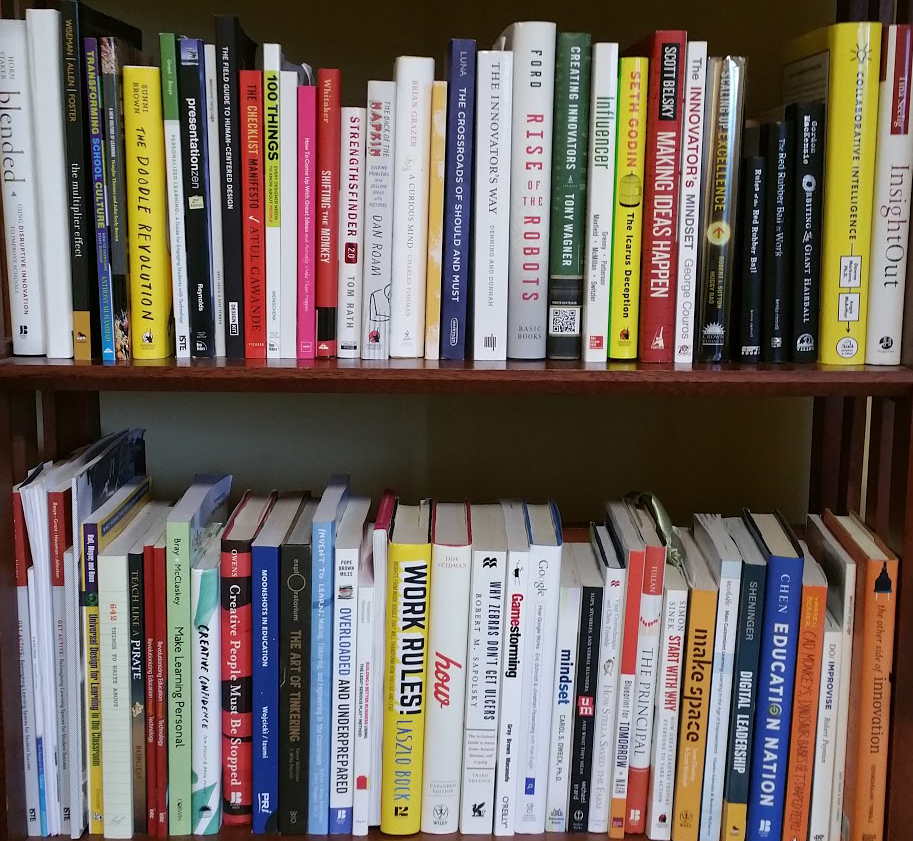
Wherever you may be right now in your career and personal life, I'm sure that you're also reflecting and beginning to plan ahead for the new year. In The Little Paris Bookshop by Nina George,  Perdu the bookseller has an uncanny ability to prescribe just the right reading for everyone who walks in the door. In that spirit, here are my reading prescriptions for educators who are wanting to make change happen in 2016.
books_edited-1
A Fresh Start
The Life Changing Magic of Tidying Up: The Japanese Art of Decluttering and Organizing by Marie Kondo. Clear out the clutter and the cobwebs in your office and home and you'll find that your thinking clears up too. There is a certain magic to this book if you can just believe and follow Kondo's expert advice.
Leadership Lessons
Strength Finders 2.0 by Tom Rath provides access to an online assessment to give you a nudge in the right direction of your talents.
The Innovator's Mindset: Empower Learning, Unleash Talent, and Lead a Culture of Creativity by George Couros. George has a heart for students and encourages school leaders to establish a common vision and build on the strengths of others.
The Multiplier Effect: Tapping the Genius Inside Our Schools by Liz Wiseman, Lois Allen and Elise Foster. This book provides many great team activities to bring out the best in everyone and build a strong team.
I Have an Idea
How to Come Up With Great Ideas and Actually Make Them Happen by Ewan McIntosh. Ewan practices what he preaches and uses learning from companies and schools to show how design thinking can help your organization to innovate.
The Field Guide to Human-Centered Design by IDEO.org is a great toolkit for getting started with designing solutions that are innovative and impactful. Great workshop materials are included.
The Lean Startup by Eric Ries. Don't just sit there. Get moving! This book encourages you to build the plane while you're flying it.
Seeking Adventure
A Curious Mind: The Secret to a Bigger Life by Brian Grazer. Brian's stories will give you ideas for seeking out answers to those curious questions.
The Crossroads of Should and Must: Find and Follow Your Passion by Ella Luna. Sometimes you just need a little inspiration. This book will inspire you to take advantage of opportunities for adventure.
Insight Out: Get Ideas Out of Your Head and Into the World by Tina Seelig. Tina provides insights into how you can move forward with implementing your ideas with an entrepreneurial spirit.
Stuck in a Rut 
The Achievement Habit by Bernard Roth. Roth, co-founder of the Stanford d.school, explores how you can use design thinking to reach your goals.
Scaling Up Excellence: Getting to More Without Settling for Less by Robert Sutton. Sutton shares his expertise and discusses how successful organizations are able to effectively scale programs.
Most Likely to Succeed: Preparing Our Kids for the Innovation Era by Tony Wagner and Ted Dintersmith will challenge you to think about re-imagining education to prepare students for success in a global economy.
Craving Creativity
The Doodle Revolution: Unlock the Power to Think Differently by Sunni Brown will unlock your artistic abilities and enable you to capture deep thinking.
Creative Confidence: Unleashing the Creative Potential Within Us All by David Kelley. Kelley believes that we all have the power to think creatively and use innovative approaches to solve problems.
Telling your Story 
Weekend Language: Presenting with More Stories and Less PowerPoint by Andy Craig and Dave Yewman will give you the tools to be a great speaker.
The Back of the Napkin: Solving Problems and Selling Ideas with Pictures by Dan Roam. Learn how you can sell your idea to anyone using six types of images.
Um..: Slips, Stumbles, and Verbal Blunders, and What They Mean by Michael Erard will make you more aware of how you speak and help you to remove "um" and "you know" from your vocabulary.
Dealing with Failure
The Other Side of Innovation: Solving the Execution Challenge by Vijay Govindarajan and Chris Trimble and the companion book How Stella Saved the Farm explains how to navigate rough waters and build new capabilities for your organization.
Orbiting the Giant Hairball: A Corporate Fool's Guide to Surviving with Grace by Gordon MacKenzie is a fun read and helpful for educators who are navigating roadblocks and jumping over hurdles.
I hope this list will provide you with the right dose of inspiration, knowledge, and confidence as you enter into 2016. Enjoy!